CRIN - Child Rights Information Network

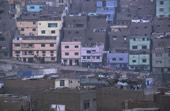
Freedom from poverty is not explicitly recognised as a human right in any international human rights treaty. However, the right to an adequate standard of living (which includes housing and food), to health, education and freedom from discrimination, housing, food, health and education, are core principles of the Convention on the Rights of the Child (CRC) and the Covenant on Economic, Social and Cultural rights. By taking these human rights principles as a framework for action, rights-based approaches tackle the underlying determinants of poverty.
According to UNICEF most of the people living in poverty are children and that child poverty is growing. Poverty affects most aspects of children’s lives and can be prevented with adequate investment by governments, civil society and families on children's rights.
A rights-based approach to poverty looks at the issue as more than the absence of money and possessions. Child poverty is a consequence of the denial of rights such as the right to play, non discrimination, participation, health and health services and education. Any action to end child poverty should go hand in hand with an action to realise children's rights.
Traditional measures to fight poverty focus on the economic status of households, neglecting inequalities within households. Furthermore, children's views are rarely taken into account when government and other institutions develop economic policies. This is a reflection of indirect discrimination against children and the assumption that adults know what is best for children. The impact of this lack of consideration for children is discriminatory in that a disproportionate number of children are affected by poverty compared to the rest of the population. Rights-based approaches focus on how individuals experience poverty, detecting inequalities by disaggregating data by sex, age, ethnicity, geographic region and economic status. This enables agencies to focus on the needs of vulnerable population groups to equal participation, empowerment and visibility participation in local decision-making bodies that distribute resources. Rights-based approaches face a significant challenge in coping with shifts in poverty levels caused by seasonal changes, vulnerability to natural disasters, environmental degradation and conflict. Changes can be tackled by collaborating with key actors, including communities, private companies and governments, to establish mechanisms that monitor crises and provide a framework for accountability.
Example: A rights-based approach to poverty: mobilising children for participation in Ghana
Programmes to control trachoma (an infection of the eye transmitted by flies) often include hygiene programmes in schools. When discussing such a programme with students in northern Ghana, a number of issues emerged: the borehole was far from the school grounds; the female students had to carry water to the school every morning and the girls carried water not only to the classrooms but also to the teachers’ houses. These were issues of gender equality, of child exploitation, and of village politics that were felt strongly by the students. All of these issues were potentially more important to the children than the incidence of trachoma.
In order to generate lasting results, any solution would need to take these concerns and violations into account. It shows the importance of including children as partners in setting the agenda.
Care
 Print page